Programming Languages, Databases, and Operating Systems
- Programming Language: Python (Pandas, Numpy, Scikit-learn).
- C and C++ programming.
- SQL, MySQL, MongoDB, and PostgreSQL.
- 10+ years using Linux (various distributions).
This website presents my work in AI/ML Engineering, Data Science, and technical leadership.
Here you can explore my professional experience, selected cases, and academic work focused on turning data and AI into business results.
You will also find my professional experience, skills, tools, and concepts related to Data Science.
Feel free to get in touch through the links at the bottom of the page.
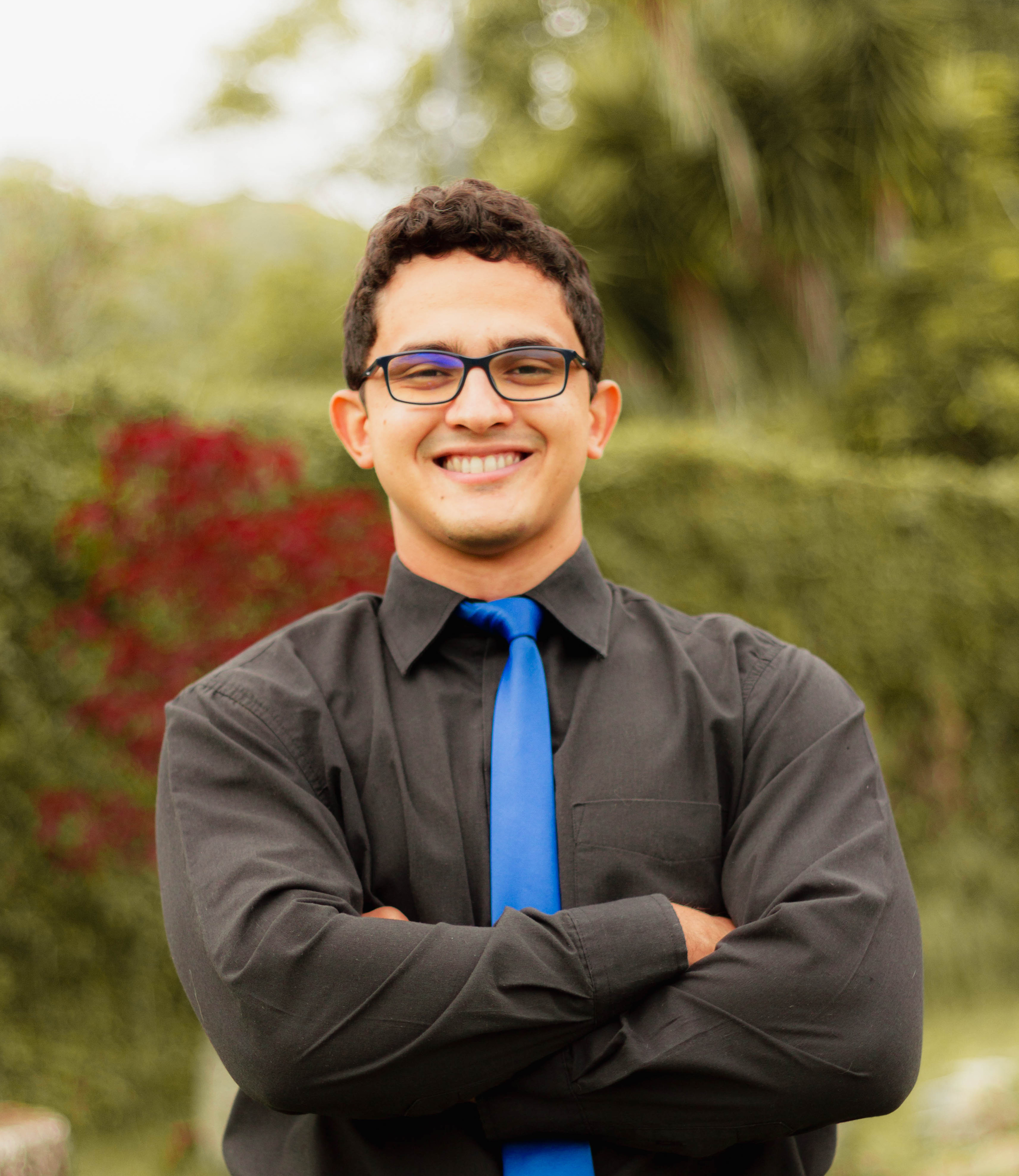
My name is Erick Gomes, MSc in Computational Physics from Universidade Federal Fluminense (UFF), currently working as a Senior Data Scientist and AI/ML Engineer with years of experience combining academic research, industrial development, and higher education. My professional journey spans from materials physics research to implementation of generative AI solutions in production, including Large Language Models (LLMs), RAG systems, specialized chatbots, and multi-agent architectures.
Throughout my career, I have developed expertise in the complete machine learning lifecycle: from fundamental research to production deployment. I can highlight my experience in specialized model fine-tuning, building robust MLOps pipelines, cloud platform integration (AWS), and implementing monitoring and compliance systems for AI models in corporate environments. My technical background spans from traditional ML algorithms to the most advanced Transformer-based architectures, always focusing on scalability, performance, and business value.
I currently divide my work between the corporate market, where I serve as Staff AI/ML Engineer at Serasa Experian leading AI and machine learning engineering initiatives at scale, and the academic environment, fulfilling roles as Undergraduate Professor at FIAP and Data Science Professor at Ada Tech. In these educational positions, I teach specialized courses in Artificial Neural Networks, Deep Learning, Genetic Algorithms, Generative AI and Advanced Nets, Artificial Intelligence and Machine Learning, contributing to the education of the next generation of AI/ML professionals in Brazil.
My previous experience in the financial market (Klavi, TecBan) gave me a unique perspective on AI application in regulated environments, including developing predictive models for credit scoring, fraud detection, churn prediction, and Open Finance data analysis. This multi-faceted experience - combining academic research, industrial development, and higher education - uniquely positions me to lead complex AI projects that require both technical rigor and strategic business understanding.
Period: Jan 2026 - Present
Leading AI and machine learning engineering solutions focused on scalability, reliability, and business impact.
Period: April 2024 - Jan 2026
Location: São Paulo, Brazil (Remote)
Period: August 2023 - April 2024
Location: São Paulo, Brazil (Hybrid)
Period: July 2022 - July 2023
Location: São Paulo, Brazil (Remote)
Period: July 2023 - December 2023
As a teaching assistant for the Machine Learning applied to Physics course, I played a central role in exploring and applying the fundamental principles of machine learning to solve specific challenges in theoretical and experimental physics.
My technical contribution involved guiding students in implementing supervised and unsupervised learning algorithms, such as regression, classification, neural networks, and clustering methods, to analyze datasets from various sources. Using languages and libraries such as Python, TensorFlow, and scikit-learn, I explored data preprocessing methods, feature selection, and model optimization to extract accurate insights and reliable predictions.
I was responsible for weekly guidance in the graduate course and assisting in the completion of course activities.
Period: March 2022 - March 2025
Location: Niterói, Rio de Janeiro, Brazil
Master's Dissertation: Read full dissertation (PDF)
Developing my research in the area of machine learning applied to Physics, I have been using best practices in data science to propose new solutions in the analysis of large databases.
During my undergraduate research, I developed skills in various computational tools such as shell script programming, parallel computing, and Linux systems. I was responsible for conducting studies related to materials physics through computational simulation, a field that involves producing large amounts of data to be analyzed.
During the extension project, I used embedded systems such as Arduino and ESP32 to produce physics experiments. I was also responsible for coordinating/guiding a group of undergraduate students to produce similar experiments.
During the electronics technician course, I learned about electronic systems and components, which later enabled me to develop projects in data analysis of electronic circuits and embedded systems.
Period: August 2025 - Present
Location: São Paulo, Brazil (On-site)
Professor specialized in advanced Artificial Intelligence and Machine Learning disciplines.
Period: January 2025 - Present
Location: Brazil (Remote)
Responsible for teaching specialized Data Science and MLOps courses.

Build a model to forecast sales for the Rossmann pharmacy chain.

Build a model to predict credit card default.
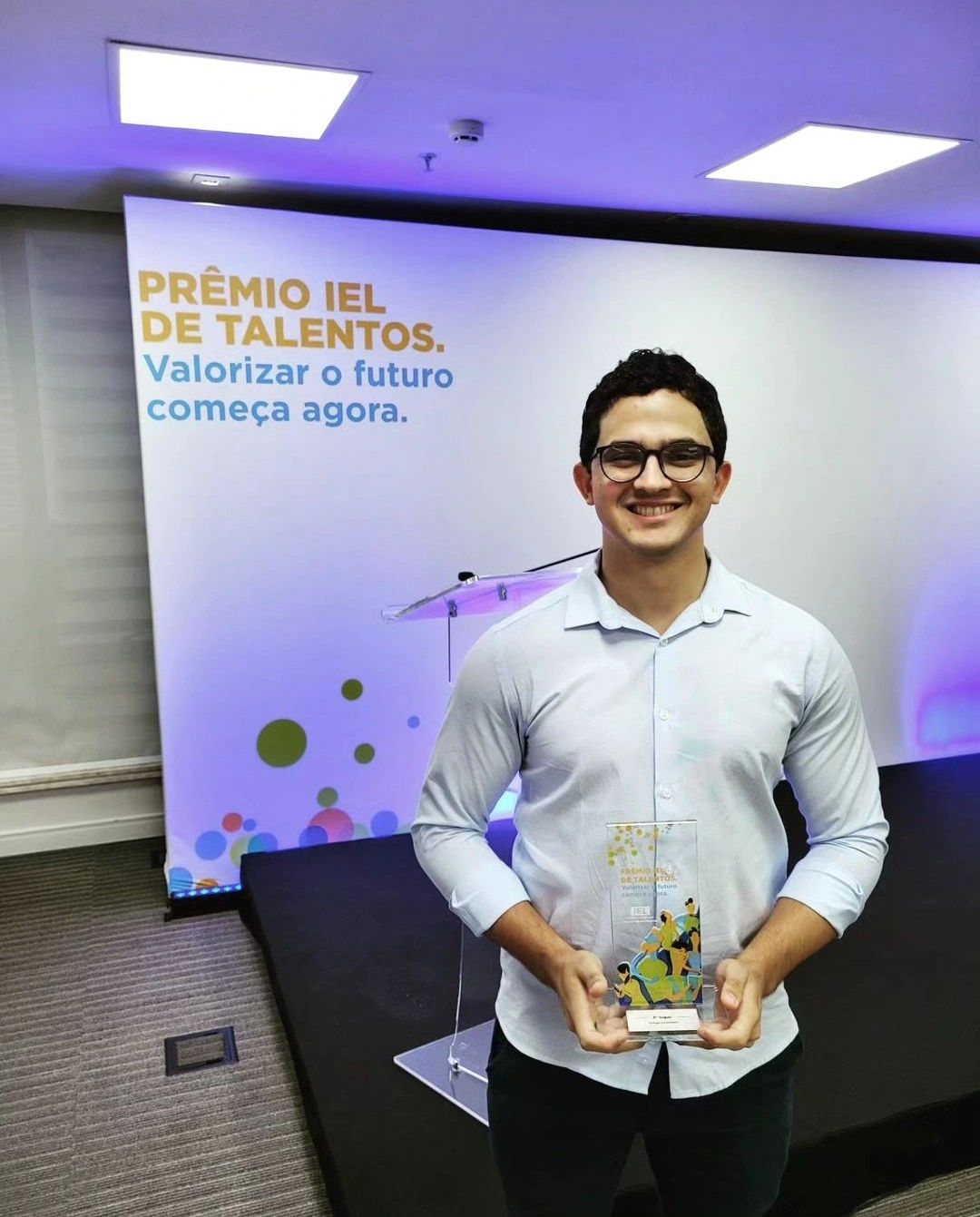
This article explores the synergy between Open Finance and Artificial Intelligence (AI) and its impact on the financial industry. We analyze the concept of open finance, which encompasses the opening of financial data and services through APIs (application programming interfaces), and the application of AI in this context. We discuss the benefits of open finance, such as greater financial inclusion and innovation, and highlight how AI can be used to enhance data analysis and the personalization of financial services. We conclude that the combination of open finance and AI has the potential to transform the way we relate to finance, providing a more efficient, convenient, and personalized experience.
Feel free to get in touch.